Column · @e4d4cot7tu
Precision Agriculture Services: Where Drones Fit Into the Modern Farm
The shift from guesswork to GPS guidance
Farming has always been a numbers game, but the numbers have changed. A generation ago, decisions about fertiliser and seed were made on gut feel, last year's yields, and a quick walk across the fields. Today, the same decisions can be backed by data from soil sensors, satellite imagery, and agricultural drones. That combination of tools, working together, is what most people now mean by precision agriculture services. It is not about replacing the farmer's instincts; it is about sharpening them.
I have spent enough seasons in the cab and on the headland to appreciate how much has shifted. The old way was to spread a uniform rate of granular fertiliser across every field, regardless of what each patch actually needed. That worked, but it was inefficient. Some areas got more than they could use, and others were left short. The result was wasted input and uneven growth. Variable rate application changes that. It lets you match the rate to the potential of each square metre, using data from yield mapping, soil sampling, and crop sensing. The savings are not just in the input bill; they are in the crop itself.
Why drones earn their place
Agricultural drones have earned a reputation as the workhorses of modern agronomy, and for good reason. They do things that ground equipment simply cannot do as well, or as quickly. A drone can cover a 50 hectare field in a fraction of the time it takes a tractor, especially when the ground is wet and a heavy sprayer would cause compaction. It can also get to parts of the field that a machine cannot reach, such as steep slopes, awkward corners, or areas where the soil is too fragile to bear the weight of a wheel.
But the real strength of a drone is not just speed; it is precision. A well-flown drone with the right spreader equipment can apply seeds, granular fertiliser, or agrochemicals with remarkable accuracy. The DJI Agras series, for example, has become a common sight in UK agriculture, and for good reason. These machines can be programmed with exact flight paths and application rates, so you know precisely what went where. That level of control is a big step up from the old blanket approach.
When you pair that capability with the data side, the value multiplies. Crop scouting with a drone can reveal patterns that are invisible from the ground. NDVI imagery, which measures the health of the crop by the light it reflects, can show stress from drought, disease, or nutrient shortage weeks before the naked eye sees it. That gives you time to react, and reaction time is everything in farming.
The practical side: what precision agriculture services actually involve
Precision agriculture services cover a wide range of activities, but they all share a common aim: to put the right input, in the right place, at the right rate, at the right time. It sounds simple on paper, but the execution takes skill and experience.
On the data side, you have the survey. A drone flies over the crop, captures high-resolution images, and builds a detailed map of the field. That map can be used for crop scouting, to identify problem areas, or combined with soil sensor data to build a prescription for variable rate application. The prescription file tells the spreader or sprayer how much to apply in each part of the field. When you are dealing with a seed coating that has to be applied evenly, or a granular fertiliser that must not be over-applied near a watercourse, that kind of accuracy matters.
On the application side, the drone does the work. It can spread seed over a failed patch, or apply a top-up of nitrogen to a struggling strip, without driving over the crop. It can spray a targeted herbicide on a weed patch, reducing the amount of agrochemical used and the risk of drift. The equipment has come a long way. Modern spreader equipment on a drone can handle a range of materials, from fine granules to coated seed, and the control software makes it easy to adjust rates on the fly.
One thing I have learned is that precision agriculture services are not a one-size-fits-all product. The right approach depends on the farm, the crop, the soil, and the season. A 20 hectare vegetable plot needs a different plan than a 400 hectare broadacre farming operation. The tools are the same, but the way you use them has to be tailored.
The trade-off: drones versus tractors
There is a natural temptation to see drones as the replacement for everything, but that is not how it works. A tractor with a large sprayer still has a place, especially for big, flat fields where speed and horsepower matter. The drone is not trying to out-muscle the tractor; it is trying to outsmart it. For example, a drone might be used to spot a nitrogen deficiency in a specific part of the field, and then apply a variable rate top-up to that area only, while the tractor handles the main crop with a standard application. That is a division of labour that plays to each tool's strengths.
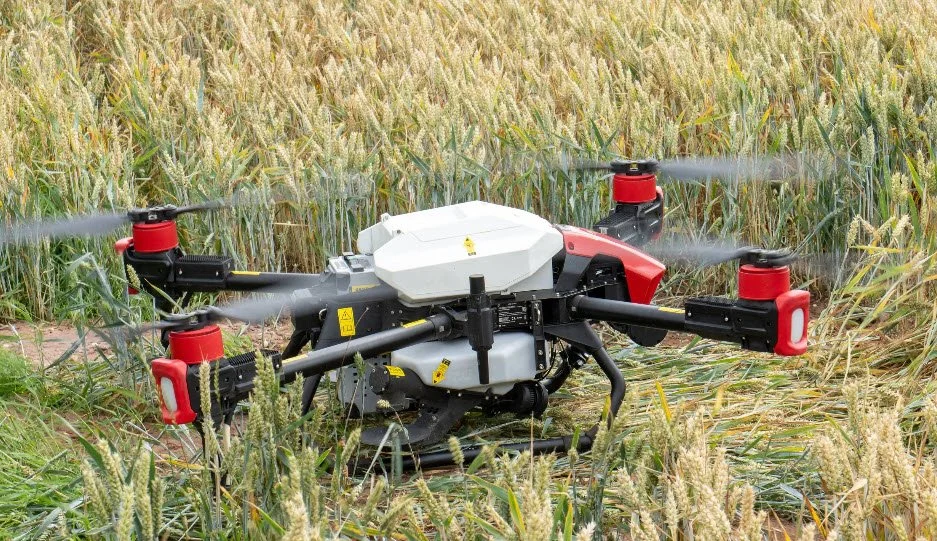
There is also the question of cost. Buying a drone and the associated software is not a small investment, and the learning curve is real. That is why many farmers choose to work with a specialist provider rather than buy their own equipment. A good provider brings the know-how, the insurance, and the experience of having flown in all sorts of conditions. They also keep up with the latest regulations, which are changing all the time.
Making it work on your farm
If you are thinking about bringing precision agriculture services into your operation, it is worth starting with a clear goal. What do you want to improve? Is it the efficiency of your fertiliser use? The accuracy of your spraying? The speed of your crop scouting? Once you know the outcome you are after, you can decide which tools to use and which areas to focus on.
Start with a simple crop scouting flight. Fly the field, take a look at the NDVI map, and see what stands out. You might be surprised at how much variation there is, even in a field that looks uniform from the road. That map can guide your soil sampling, so you are not taking cores from the same type of soil all over the field. It can also inform your yield mapping at harvest, giving you a more complete picture of how the season went.
From there, you can move into variable rate application. The first step is to build a prescription map, which is a digital layer that tells the spreader or sprayer how much to apply in each zone. This can be based on soil type, previous yield, or a combination of data. The actual application can be done with a tractor-mounted spreader that is GPS guidance enabled, or with a drone if the field is small or the conditions are tricky.
There is a learning curve, and you will make mistakes. I have seen farmers put too much faith in a single data source, only to be caught out by a change in the weather. The key is to use the data as a guide, not a gospel. Combine it with your own knowledge of the field and the crop, and you will get the best results.
Where the industry is heading
The pace of change in agricultural technology is not slowing down. Drones are getting smarter, with better sensors and longer flight times. Software is getting more intuitive, making it easier to turn data into action. And the range of what can be done with a drone is expanding. We are already seeing drones used for weed suppression with targeted micro-doses of herbicide, and for applying biological control agents in a way that was impossible a few years ago.
For the agribusiness that is willing to adapt, the benefits are clear: better farm efficiency, lower input costs, and a more sustainable footprint. But it is not just about the bottom line. There is a satisfaction in knowing that you are doing the job well, that you are using the tools of the modern age to look after the land and the crop.
At the end of the day, precision agriculture is not a magic wand. It is a set of tools, and like any tools, they are only as good as the person using them. The best results come when you combine the data with the skill and the feel that comes from years on the land. That is the real value of precision agriculture services, and it is why they are becoming a standard part of modern farming practice.